Building a teaching kitchen: what is different from a commercial kitchen
Higher education · The short answer
A teaching kitchen is built for people to watch and take part, not only to cook. It needs clear sightlines to the instructor, several matching cook stations, an accessible station, and durable surfaces, and it has to meet the same ventilation and fire rules that every kitchen does.
How should the room be laid out?
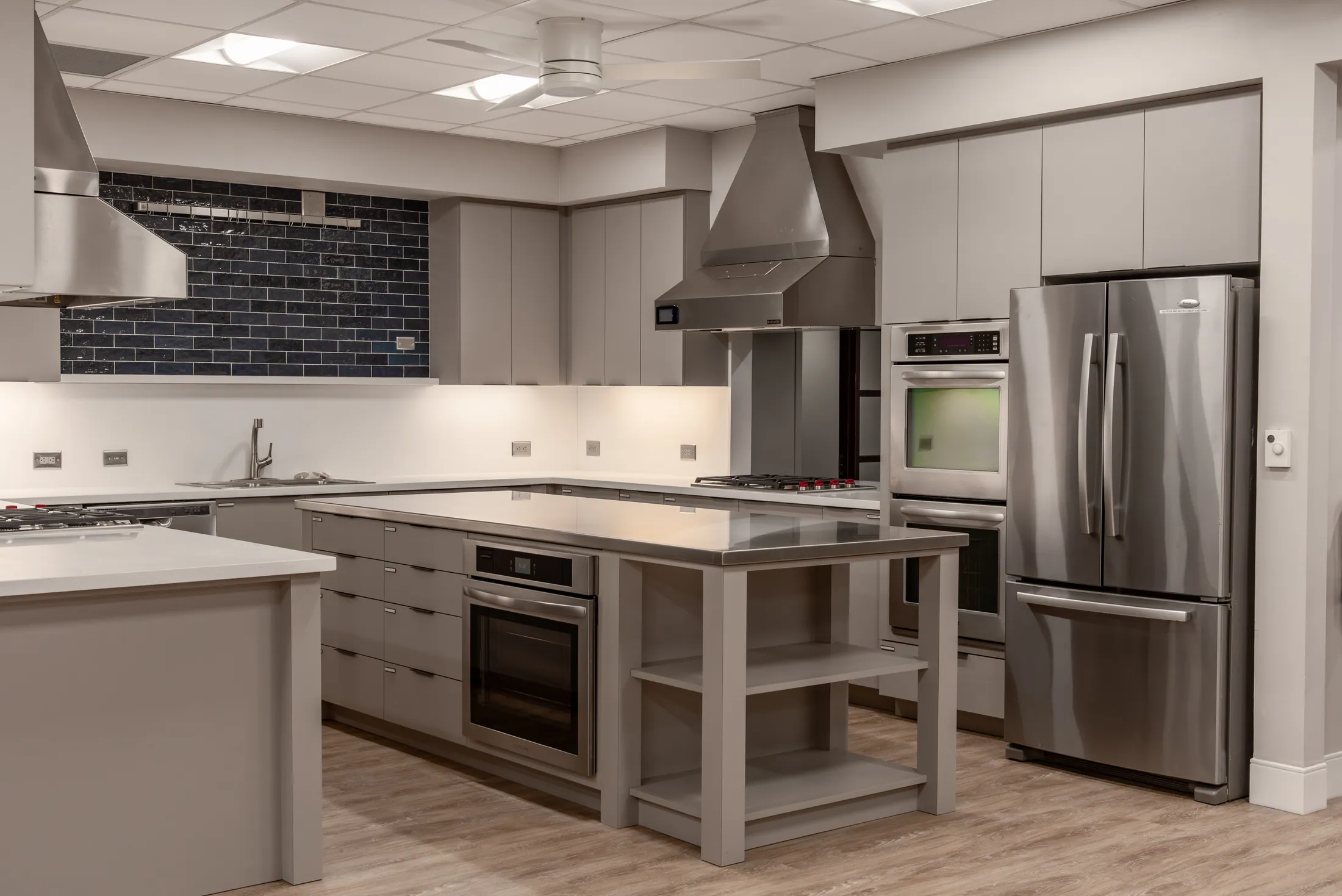
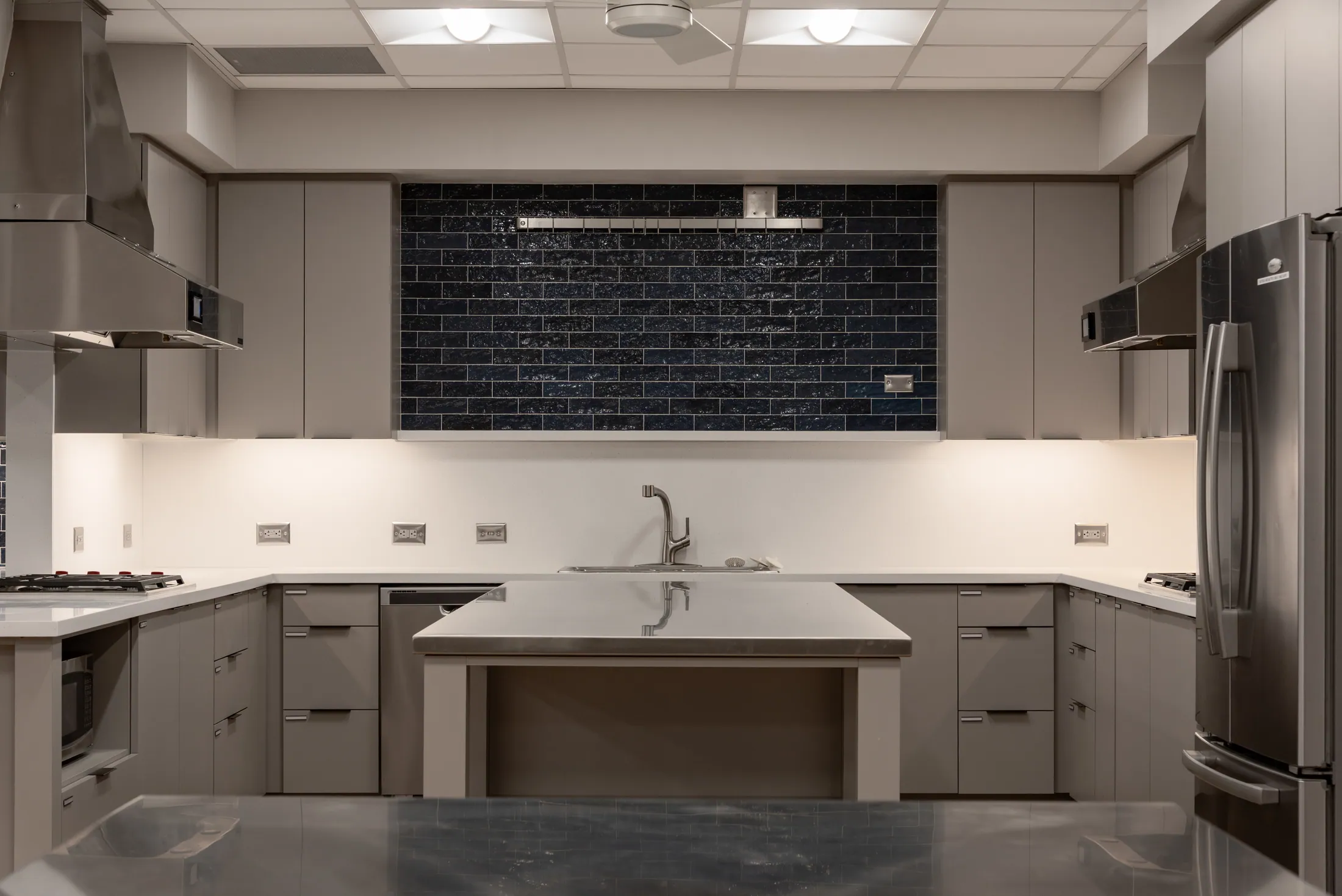
Start with where the instructor stands and make sure every student can see that spot. A central island for demonstration with stations around the perimeter works well, because students can turn from their own counter to the instructor without moving.
Leave more floor between counters than a home kitchen would. A class moves as a group.
What equipment belongs in it?
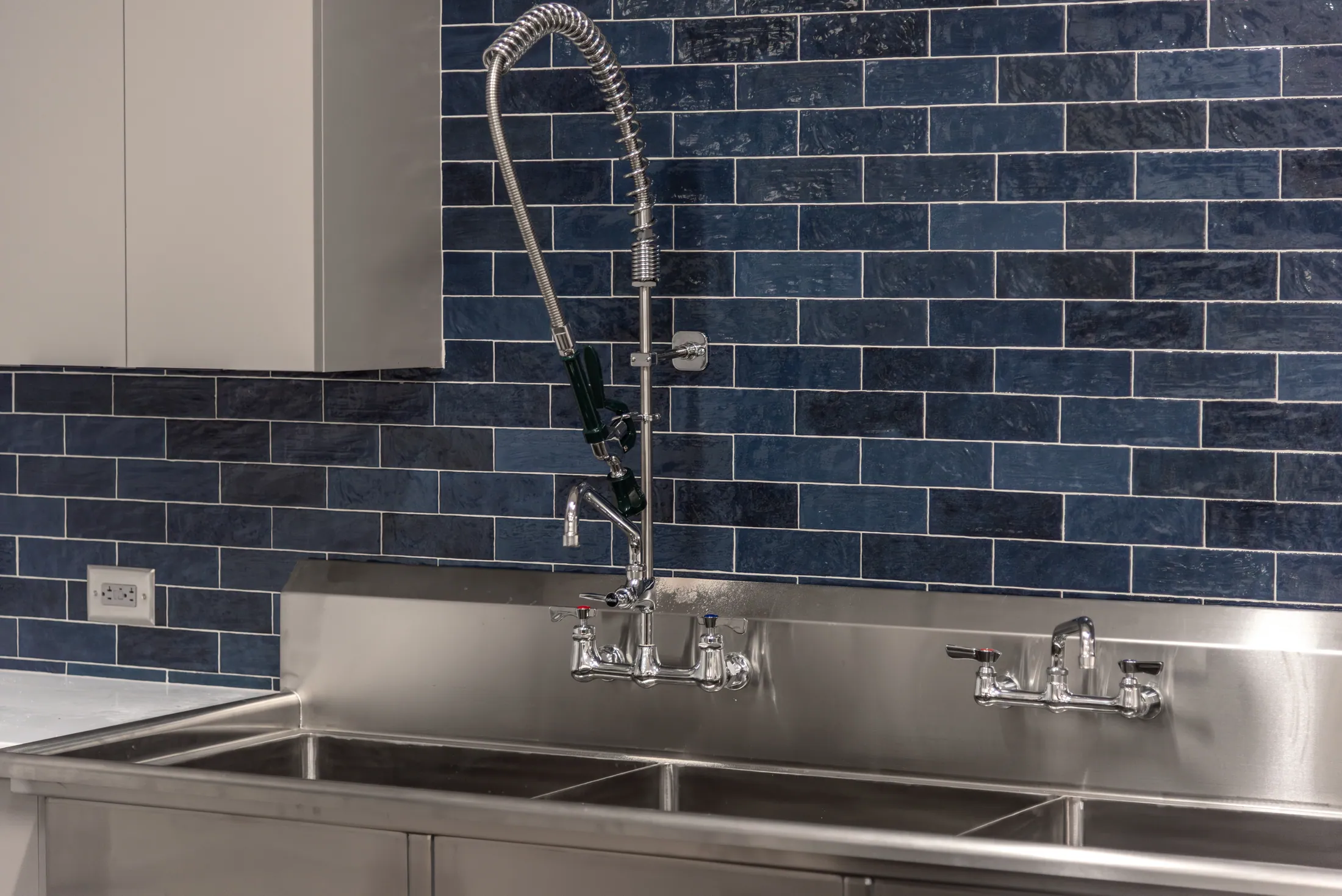
Most teaching kitchens mix equipment. Students learn on the ranges, wall ovens and refrigerators they will meet in a home, while the cleanup side uses commercial sinks and a pre-rinse sprayer because it has to turn a room around between classes.
What does the code require for ventilation?
Every cooktop needs a hood, and the type of hood depends on the appliances and on how the code official classifies the room. Settle that with the authority before the equipment is ordered, because it decides the ductwork, the make-up air and whether a fire suppression system is needed.
How do you make it accessible?
At least one station should work for a cook who is seated: a lowered counter, open knee space below the cooktop and sink, and controls at the front. It is easy to build in at the start and awkward to add later.
What is different about building on a campus?
The calendar sets the schedule. Loud work and shutdowns have to fit breaks, deliveries have to avoid class changes, and the room has to be ready for the first day of term. That means ordering equipment and millwork well before the space is handed over.
Common questions
Does a teaching kitchen need a commercial hood?
It depends on the appliances and on how the local code official classifies the use. Ask early, because the answer changes the mechanical design.
How many stations should it have?
Plan from class size. Two to four students per station is common, with one demonstration station for the instructor.
Can it be built over a summer break?
Often, if design, permitting and equipment orders are finished before the break begins. The construction window is short, so the preparation has to be long.
The project behind this post
University Teaching Kitchen Renovation