What goes into a restaurant build-out
Restaurants · The short answer
A restaurant build-out is driven by its kitchen and its mechanical systems more than by its dining room. The hood, the grease duct, the grease interceptor, gas, floor drains and make-up air set the schedule and a large share of the cost, so they should be designed before the finishes are chosen.
Why start with the kitchen?
The equipment plan tells the engineers what to design. Each piece needs power, gas, water or a drain, and the cooking line needs a hood, an exhaust path to the roof and make-up air to replace what the hood removes.
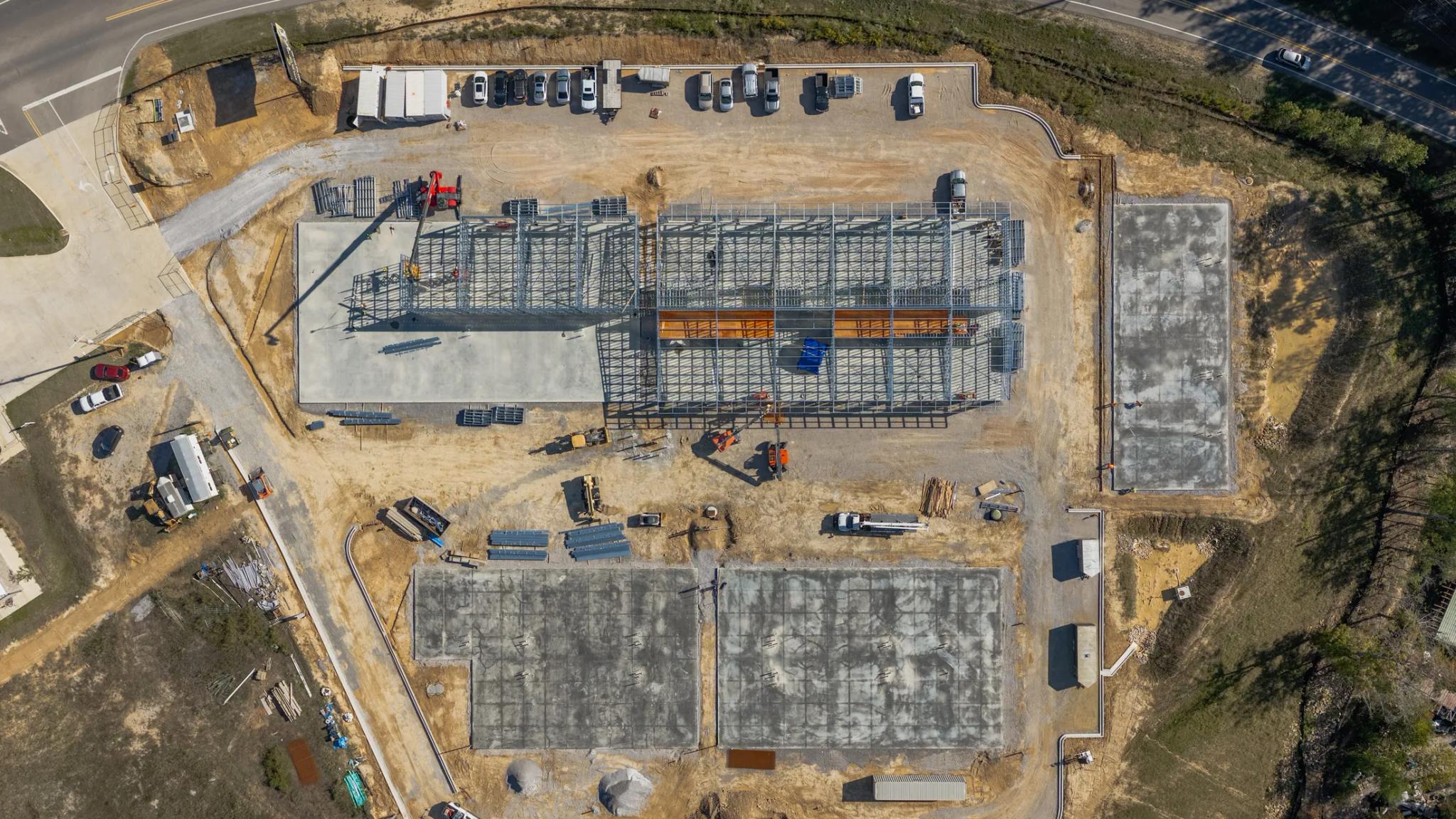
In an existing building, drains and the grease line usually mean cutting and trenching the slab. That is early, messy work that everything else waits on.
What should you check before signing a lease?
Check the size of the electrical service, whether gas is available, where a grease interceptor can go, and whether the roof can carry new equipment. Count the restrooms and the exits against the seats you want.
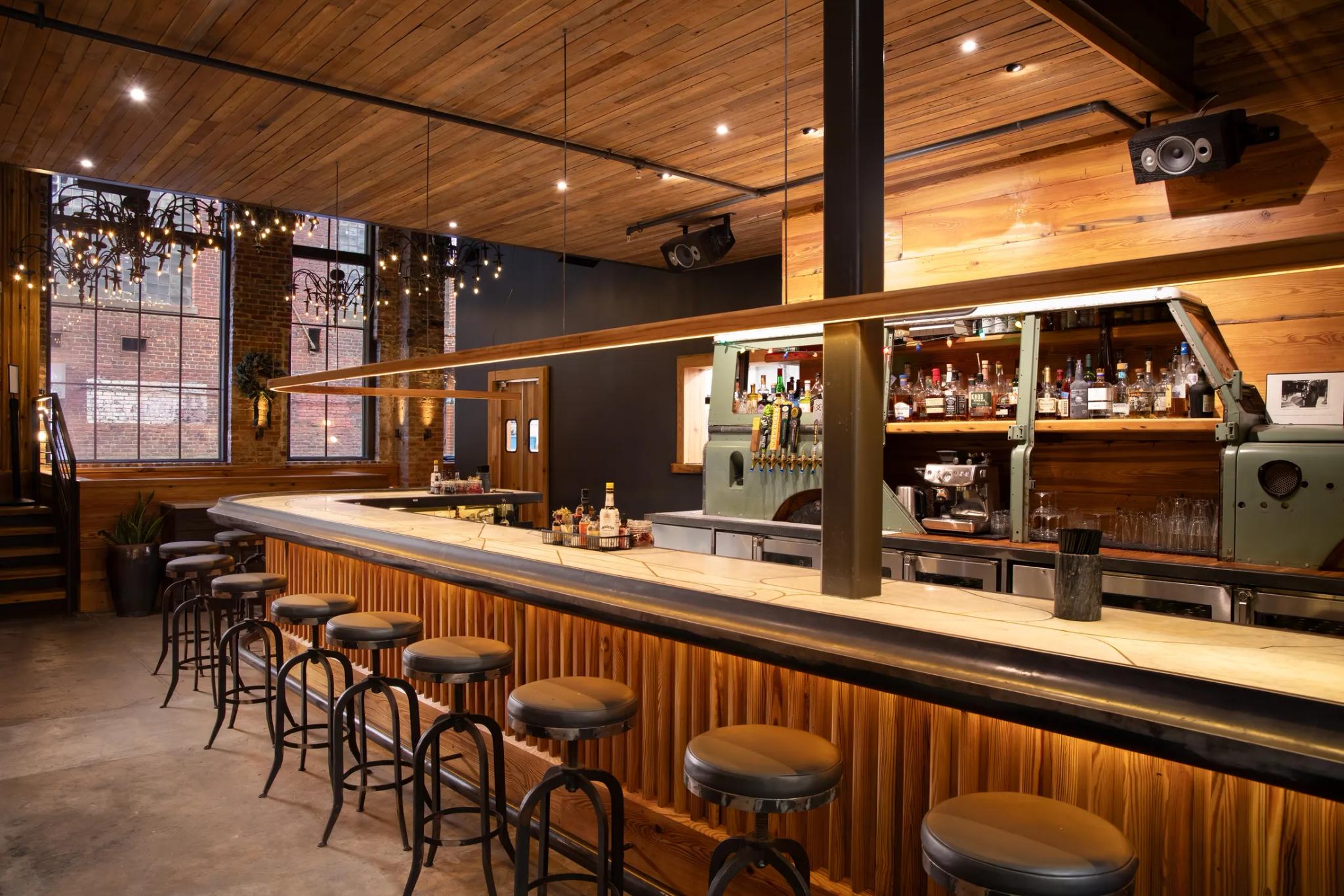
A space that was a restaurant before is faster to build, because the hood, the grease line and the restrooms are already there.
Which approvals does a restaurant need?
Expect a building permit, a health department review of the food service plan, and a fire review of the hood suppression system. Each has its own inspections, and the health inspection comes last.
Design and permitting often take as long as construction. Start them before the lease clock starts if you can.
What has to be ordered early?
Hoods and exhaust fans, walk-in coolers, electrical gear, custom millwork and specialty tile all have long lead times. Order them as soon as the design is fixed.
How do the finishes hold up?
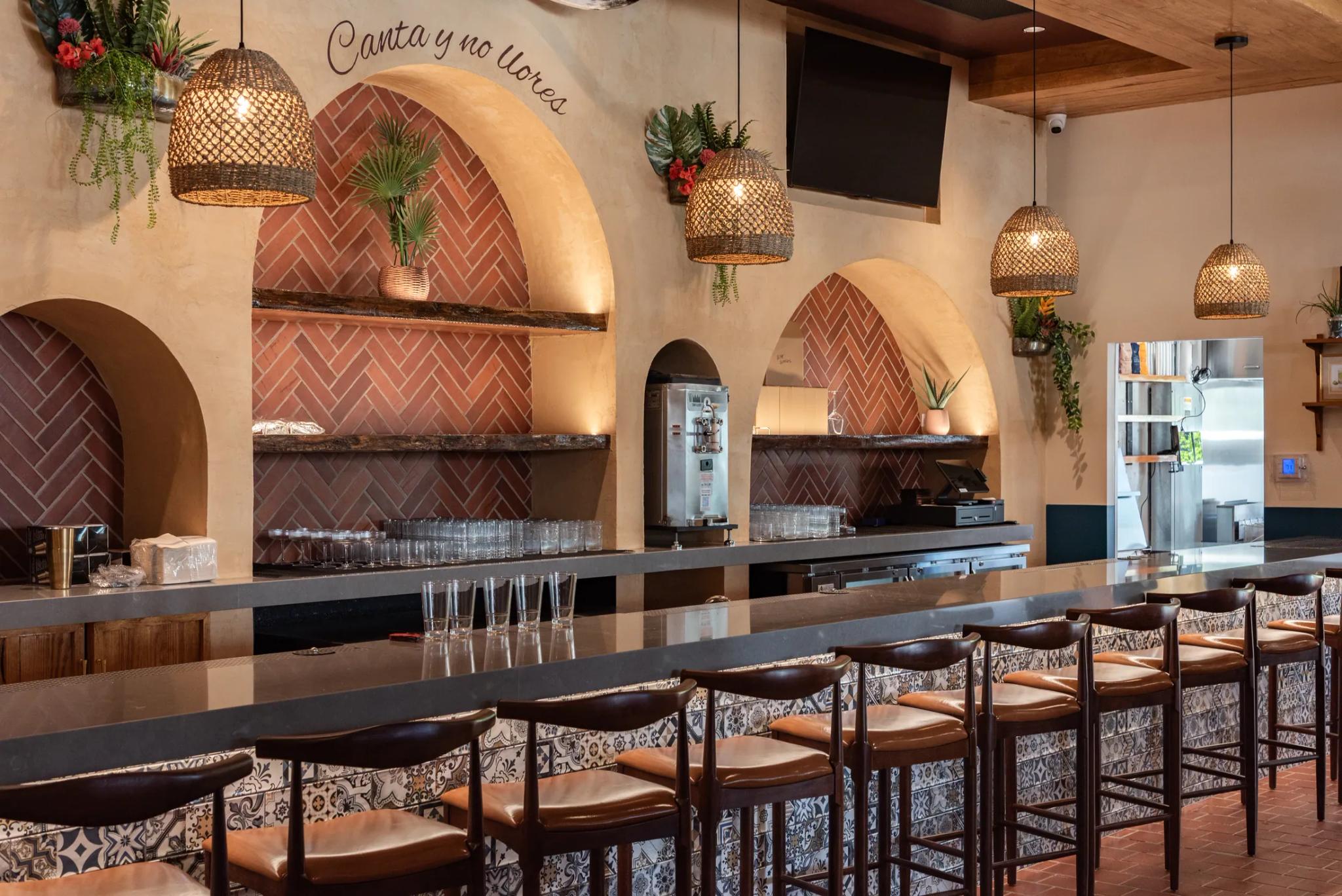
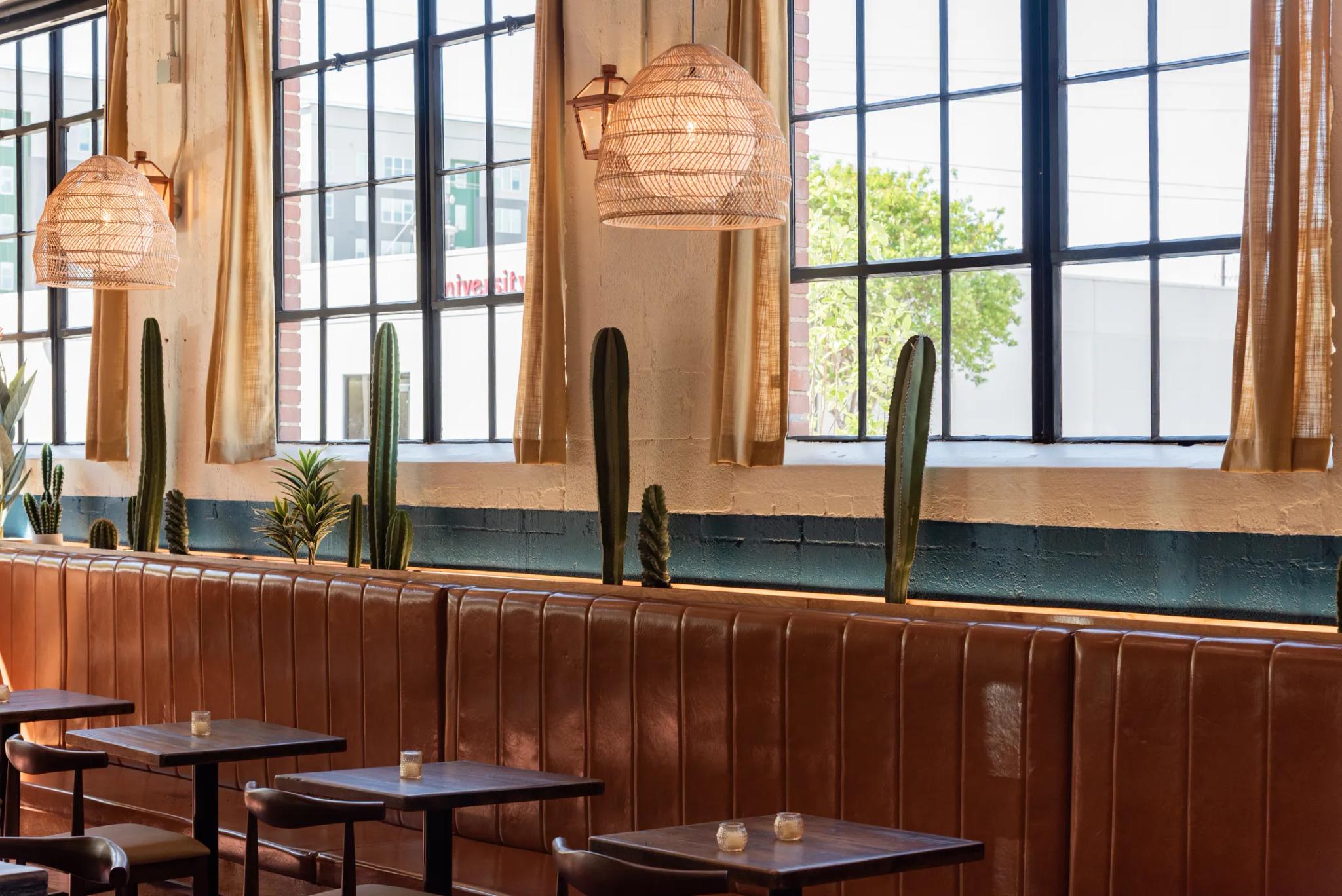
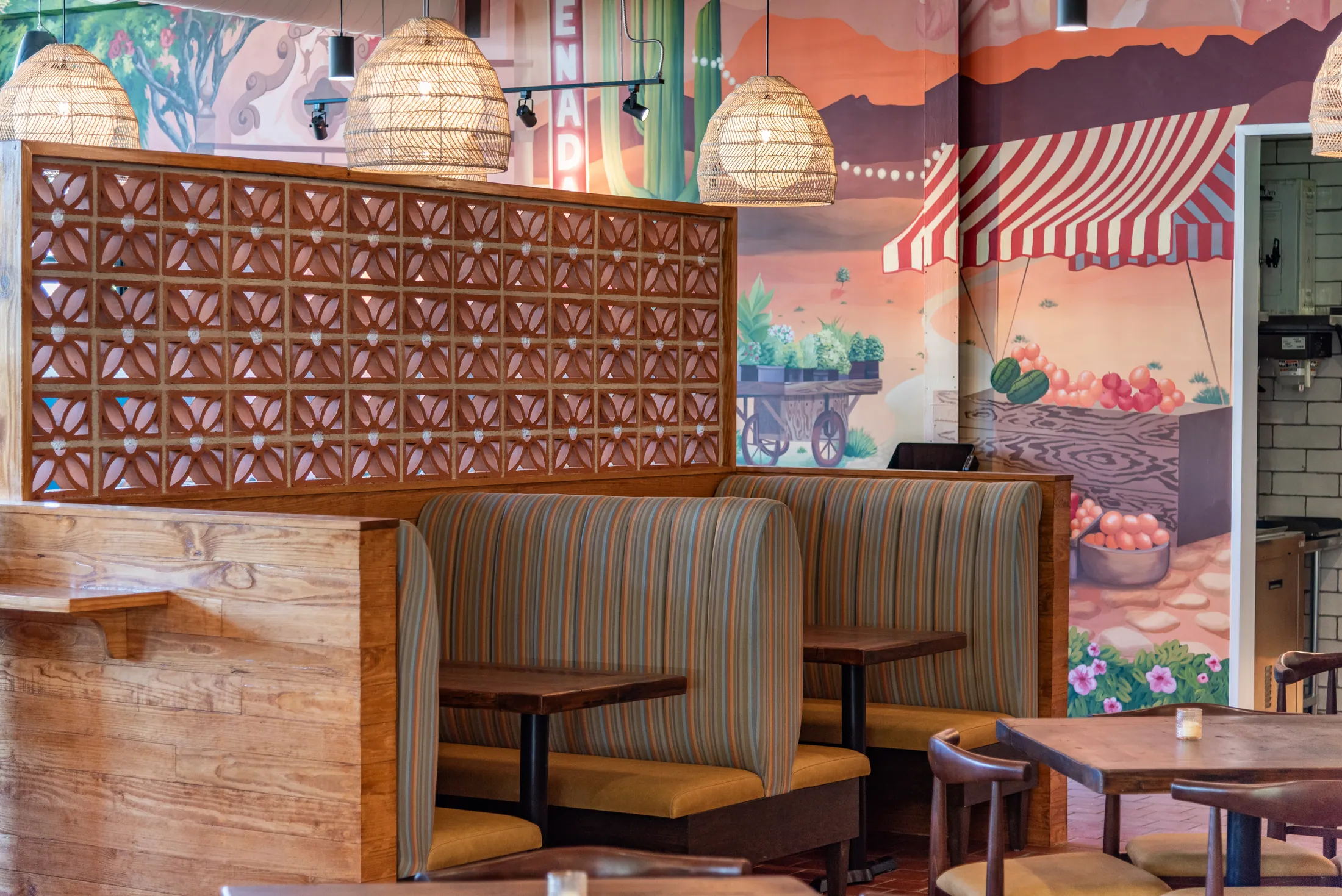
A dining room takes more abuse than almost any other interior. At De Nada the bar is plaster and brick with a stone top, the seating is built in, and the floors and wall bases are tile.
Common questions
How long does a restaurant build-out take?
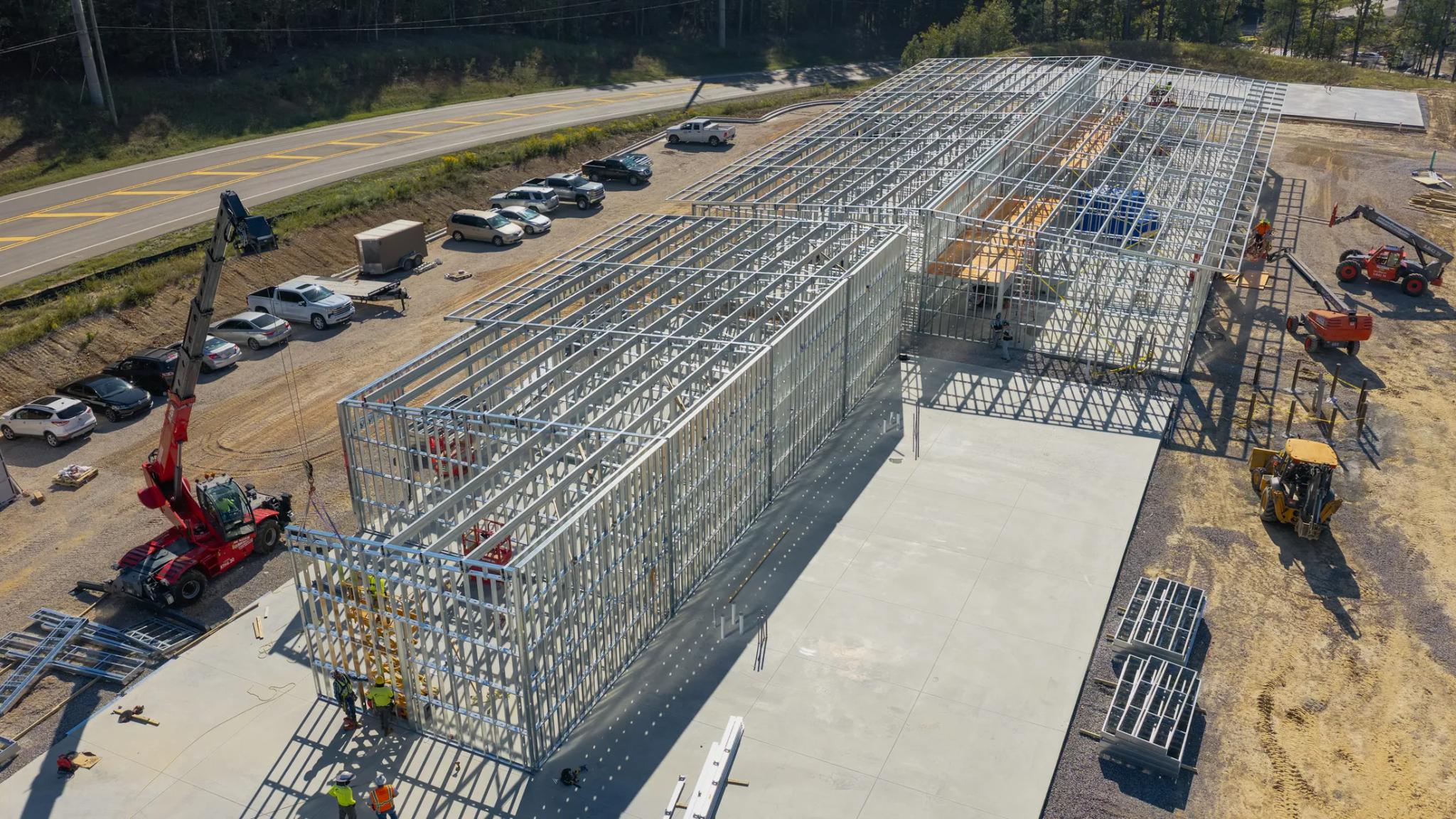
It depends on the condition of the space and on permit review. A former restaurant is faster than a bare shell. Plan for design and permitting to take about as long as construction.
Can a restaurant go into an old building?
Yes, and old buildings often make the best rooms. Confirm the exhaust path, the utilities and the exits before you commit.
Should I sign the lease before talking to a contractor?
Walk the space with a contractor first. An hour on site can show whether the building suits a kitchen.
The project behind this post
Restaurant Build-Out in a Brick Warehouse